

.jpeg)


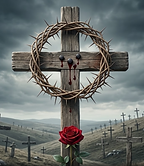


We all will be judged!
The Heart-Hardening and Spiritual Idolater
This diagnostic test is designed to expose the subtle, progressive stages of a hardening heart. In scripture, a hardened heart doesn't happen overnight—it begins with minor excuses, moves to casual neglect, and ends in open defiance of God’s commandments.
📋 The Heart-Hardening Diagnostic Test
Instructions: Answer these 10 direct questions honestly to evaluate whether your heart is remaining soft and responsive to the Holy Spirit, or if it is actively calcifying into a state of disobedience.
Question 1: The Reaction to New Truth
When you are reading scripture or listening to the Word, and you discover a clear commandment of Yehovah that you have never kept before (such as His Seventh-Day Sabbath or His dietary boundaries):
-
A) Your heart breaks in immediate repentance. You say, "I didn't know, but now I will change my life to obey."
-
B) Your mind instantly goes on the defensive, looking for loop-holes, modern theological excuses, or reasons why that specific law "doesn't apply to you."
Question 2: The Shift from Conviction to Comfort
Think back to the first time you realized you were violating one of God’s explicit instructions. How has that feeling changed over time?
-
A) The conviction remains sharp, heavy, and uncomfortable until you physically repent and align your actions with the Word.
-
B) You used to feel bad about it, but now you can violate that commandment routinely without feeling any internal grief or checking your conscience.
Question 3: The Seduction of the Crowd
When faced with a choice between a direct command of God and a long-standing human tradition or family holiday that violates His Word:
-
A) You stand firmly with the sword of truth, choosing to please God even if it causes painful division or awkwardness with your loved ones (Matthew 10:34).
-
B) You choose to please the crowd, rationalizing that "God knows my heart" or "it’s just a harmless tradition," prioritizing human harmony over covenant fidelity.
Question 4: The Handling of Reproof and Correction
When a brother, sister, or scriptural passage directly confronts a specific sin or compromise in your daily walk:
-
A) You humble yourself like David, examine the evidence against the infallible standard of the Word, and actively correct your path.
-
B) You become irritated, dismiss the person as "legalistic" or "judgmental," and completely shut your ears to the correction.
Question 5: Intellectual Understanding vs. Physical Application
How do you measure your spiritual maturity and standing before the King?
-
A) By your wholehearted application of the Word—ensuring that what you hear and understand translates into physical fruits of obedience (Matthew 12:33).
-
B) By your intellectual knowledge. You pride yourself on knowing the Bible, studying theology, or debating scripture, while your actual lifestyle, diet, and calendar look just like the rest of the world.
Question 6: The Standard of Grace
When you think about the blood of Christ and the grace of the New Covenant, how does it affect your relationship with the Torah?
-
A) You view grace as a clean slate that gives you the power to finally walk in total obedience, writing His law directly onto your responsive heart (Jeremiah 31:33).
-
B) You view grace as a permanent safety net or a license, assuming that His mercy acts as a cover so you can disregard His statutes and judgments without consequences.
Question 7: The Blindness to Ezekiel’s Wolves
When you sit under a pastor or teacher who actively smooths over the Torah, ignores the Sabbaths, or tells you that God's laws are an obsolete burden:
-
A) You recognize them as a blind guide doing violence to the Law (Ezekiel 22:26), and you run away from their lawless influence.
-
B) You find comfort in their sermons because they tell your itching ears exactly what they want to hear, allowing you to stay securely asleep on the broad road.
Question 8: The Desolate Places vs. Modern Comfort
How much of your daily effort, energy, and financial focus is dedicated to building your own comfort within the modern system versus preparing for His Kingdom?
-
A) You treat your life as a strict training ground, learning the agricultural, moral, and covenant laws of the King today so you are ready to be a true citizen of His restored land.
-
B) You are fully invested in securing your own ease in Babylon, giving almost zero thought to the physical, literal restoration of Israel or the laws of His royal court.
Question 9: Present-Tense Defiance
Knowing that James 4:17 states, "To him who knows to do good and does not do it, to him it is sin," what is your current posture toward a truth you know you are ignoring?
-
A) You are actively working to eliminate the compromise, bringing your home, your family routines, and your hands into subjection to the Master.
-
B) You are currently and actively engaged in a calculated delay, deciding that the economic, social, or emotional cost of obeying right now is simply too high.
Question 10: The Ultimate Warning of Amos's Sieve
When you read about the sifting of the nations and the upcoming Great White Throne Judgment where the books of record will be opened:
-
A) You tremble with holy reverence, daily begging the Father to search your hidden motives and purify you from the inside out (Hebrews 12:14).
-
B) You read the warnings with a detached, cold perspective, presuming that your past verbal profession completely exempts you from the sifting process and the standard of the Spoken Word.
-
The Heart Condition Verdict: Look squarely at your answers. If the choices consistently land on B, the scriptural diagnosis is flashing a severe warning: your heart is progressively hardening.
Pharaoh didn't wake up with a heart of stone; he reached it by repeatedly hearing the command of Yehovah and choosing to delay, excuse, and defy it. How you live your life is the only real evidence of what you believe internally. If you are currently hiding behind excuses to avoid physical obedience, you are actively calcifying your heart against the Holy Spirit. Drop the defenses, turn your face back to the Torah, and yield your walk to the King while your heart can still feel the weight of His voice.
📋 Heart-Hardening Diagnostic Test: Part 2
Instructions: Continue evaluating your patterns, thoughts, and automatic reactions against the standard of the Spoken Word.
Question 11: The "What About..." Diversion Technique
When a clear commandment from the Torah is brought to your attention, what is your immediate mental reaction?
-
A) You look directly at your own life and ask, "Am I doing this?"
-
B) You immediately try to distract from your own disobedience by bringing up hypothetical scenarios or pointing fingers at others ("Well, what about people who live on a desert island?" or "What about that hyper-legalistic person who keeps the Sabbath but has no love?").
Question 12: The Language of the Tongue
How do you speak about the structural laws, feast days, and statutes that Yehovah explicitly set up for His people?
-
A) You view them with deep affection, agreeing with King David that His law is "sweeter than honey" (Psalm 19:10) and light to your path.
-
B) You casually use words like "old," "obsolete," "bondage," "legalistic," or "done away with" when describing the very instructions the Father called holy, just, and good.
Question 13: Compartmentalizing Your Walk
How much of your life is actually subject to the authority of the Word of God?
-
A) Every single department—your budget, your calendar, what you put into your mouth, how you dress, how you run your business, and how you speak to your family.
-
B) You have boxed God into a "spiritual compartment" (prayer, church attendance, and reading devotionals), while leaving your physical habits, your business ethics, and your entertainment choices to be guided by the standards of the world.
Question 14: Casual Exposure to Abominations
When choosing what to watch, listen to, or tolerate in your home as entertainment:
-
A) You protect your eyes and ears, refusing to look at things that celebrate lawlessness, witchcraft, sexual immorality, or mockery of the Creator.
-
B) You can sit through movies or shows that openly flaunt what God calls an abomination, laughing at them or tuning them out, claiming "it’s just entertainment" or "it doesn't affect me."
Question 15: The Definition of "Love"
How do you define what it means to love God and love your neighbor?
-
A) You define it exactly how the Bible does: "For this is the love of God, that we keep His commandments. And His commandments are not burdensome" (1 John 5:3).
-
B) You define love as a warm emotional feeling, a vibe of general tolerance, or being "nice," believing that as long as you feel love in your heart, you don't actually have to execute the specific, physical laws of behavior God laid down.
Question 16: The Fear of Man vs. The Fear of Yehovah
When an opportunity arises where keeping a commandment (like leaving work early for the Sabbath or refusing unclean food at a social event) will make you look "weird" or radical to your peers:
-
A) You welcome the reproach of the Messiah, choosing to be a set-apart peculiar treasure rather than blend into Egypt.
-
B) You compromise or hide your beliefs to avoid an awkward conversation, choosing the temporary praise and comfort of men over the approval of the Master.
Question 17: Memory Trimming and Selective Amnesia
When you read through the historical accounts of Israel in the wilderness, how do you process their failures?
-
A) You take them as a terrifying personal warning, knowing that God destroyed an entire generation of believers because they refused to physically obey His voice (1 Corinthians 10:5-11).
-
B) You skim past those parts or view them as distant history that has no bearing on you, assuming that your modern religious labels give you a pass from the same standard of accountability.
Question 18: The Response to Personal Suffering or Hardship
When trials, financial tightness, or unexpected health struggles hit your life, how does it impact your obedience?
-
A) You draw closer to the Covenant, searching your life for any hidden compromise and anchoring yourself tighter to His commands.
-
B) You become bitter, loosen your grip on His standards, or say, "I’ve been trying to follow God and look what happened—what’s the point?" using your pain as an excuse to break His laws.
Question 19: Sneaking Around Your Conscience
Do you ever find yourself playing technical games with God's instructions?
-
A) You seek the full, heavy weight of the spirit of the Law, wanting to fulfill it to the absolute maximum of your ability.
-
B) You look for ways to technically slide by on a technicality—doing just enough to "look" religious to others while your heart finds ways to indulge your flesh right up to the border of transgression.
Question 20: The Grief over Lawlessness in the Land
When you look at the collapsing morality, the broken families, and the general rebellion against God's natural order in modern culture:
-
A) Your soul is vexed like righteous Lot, and you weep over the lawlessness, recognizing that the root cause is that humanity has forsaken the Torah of Yehovah.
-
B) You have become completely numb to it. You complain about politics or the economy, but you don't connect the dots to see that the root of all human misery is the rejection of the Father’s explicit instructions.
The Deep Diagnostic: A heart turns to stone one degree at a time. It happens when we value our reputation more than His righteousness, when we mistake an emotional vibe for true covenant love, and when we think our knowledge can substitute for our obedience. If these questions hit a nerve, don't ignore it. That stinging sensation is proof that the heart is still alive—repent, change direction, and walk out the truth today.
Spiritual Idolater
When you look at the concept of a spiritual idolater, it goes much deeper than the old-school picture of someone bowing down to a physical statue of wood, stone, or gold.
In a biblical sense—especially looking at the teachings of the prophets, Yeshua, and Paul—idolatry is fundamentally a matter of the heart. It happens the exact moment anything inside our lives takes the seat of priority, trust, or devotion that belongs solely to God.
As Paul writes in Colossians 3:5, “...and covetousness, which is idolatry.” He ties a condition of the heart (greed, wanting what isn't yours, or looking to material things for fulfillment) directly to worshiping a false god.
The Core Traits of a Spiritual Idolater
A spiritual idolater might look completely religious or upright on the outside, but their internal alignment is shifted. Here are the three main ways this plays out:
1. Misplaced Trust (The Security Idol)
This is looking to anything other than God for ultimate security, safety, and future stability.
-
What it looks like: Placing absolute, unwavering faith in a bank account, a political leader, a career, or a human institution to save or protect us. When those things become the source of our peace instead of the Creator, they have become functional idols.
2. Seeking Human Approval (The Pride Idol)
This ties directly back to what we looked at in Romans 2:29—seeking the praise of people rather than the praise of God.
-
What it looks like: Doing religious deeds, posting on social media, or adjusting our morals just to be seen, validated, and applauded by the culture or our peers. If the driving force of our life is "What do people think of me?" rather than "Where is my heart with the Father?", we are serving the idol of self and reputation.
3. Religious Legalism (The System Idol)
Irony of ironies, you can actually turn the letter of the law or religious traditions into an idol.
-
What it looks like: When a person falls in love with their own righteousness, their specific denomination, or their rigid checklist of rules rather than loving God and their neighbor. They trust in their ability to perform the rules perfectly to save themselves, completely bypassing a true, Spirit-led change of heart.
The Heart as an "Idol Factory"
The human heart is incredibly deceptive (Jeremiah 17:9). It has a natural habit of taking good things—like family, hard work, financial stability, or theological knowledge—and turning them into ultimate things.
A good thing becomes an idol the second you decide you cannot live, feel secure, or be happy without it.
The remedy for spiritual idolatry is always the same throughout scripture: a circumcised heart. It’s daily pulling down those internal altars to self-reliance or public approval, and anchoring our identity entirely on the root of the Olive Tree—seeking praise from God alone, where no human eye can see.
The Core Traits of a Spiritual Idolater
1. Christmas
-
The Original Date: December 25th was the Roman celebration of Sol Invictus (The Birthday of the Unconquered Sun) and the climax of Saturnalia (a wild winter festival honoring the god of agriculture).
-
The Evergreens: Bringing pine trees, holly, and mistletoe indoors comes from ancient European winter customs used to ward off winter spirits and honor fertility.
-
The Truth: Yeshua was likely born in the autumn during the Feast of Tabernacles, not in the dead of winter.
2. Easter
-
The Name: "Easter" is derived directly from ancient fertility goddesses of the dawn and spring, such as Eostre (Anglo-Saxon) and Ishtar (Babylonian Queen of Heaven).
-
The Rabbits & Eggs: Pure symbols of extreme fertility and the rebirth of nature used in ancient spring equinox celebrations. They have no connection to a Hebrew resurrection.
-
The Truth: The Council of Nicaea (325 AD) intentionally severed the resurrection celebration from its true biblical anchor—Passover.
3. Halloween
-
The Origin: Stemmed from Samhain, an ancient Celtic festival marking the end of the harvest when people believed the boundary between the living and the dead was blurred.
-
The Costumes: People wore masks and disguises to confuse or ward off wandering evil spirits.
-
The Change: The Church later renamed it "All Hallows' Eve" to transition pagans into the church system.
4. Valentine's Day
-
The Origin: Stemmed from Lupercalia, a wild, sexually charged Roman fertility festival held in mid-February.
-
The Change: Pope Gelasius replaced the festival in the 5th century by dedicating February 14th to St. Valentine, turning an old fertility custom into a romantic holiday.
5. New Year's Day (January 1st)
-
The Origin: Established by Julius Caesar in 46 BC to honor Janus, the two-faced Roman god of doors, gates, beginnings, and transitions.
-
The Custom: The month of "January" is named after Janus (who looks forward into the new year and backward into the old). Romans celebrated by offering sacrifices to him, partying, and exchanging gifts.
-
The Truth: According to the biblical calendar in Exodus 12:2, God establishes the first month of the year in the spring (Nisan/Abib), matching the rebirth of agricultural life rather than the dead of winter.
6. The Title "Pope" & "Pontiff"
-
The Origin: Derived directly from the Roman imperial title Pontifex Maximus (meaning "Supreme Bridge-Builder"), which was the title held by the high priest of the pagan Roman College of Pontiffs.
-
The Mix: Roman Emperors like Augustus and Constantine wore this title as the head of the pagan state religion. When the Roman Church gained political dominance, the Bishop of Rome adopted the title and the hierarchical supreme authority that went with it.
-
The Truth: Yeshua explicitly commanded His followers not to seek lofty, hierarchical titles or call any religious leader on earth "Father" in a supreme spiritual sense (Matthew 23:9).
7. Sun-Day vs. The Sabbath
-
The Origin: In ancient Babylon, Persia, and Rome, the first day of the week was dedicated to the worship of the Sun god (Mithra / Sol Invictus).
-
The Change: In 321 AD, Emperor Constantine issued a strict imperial decree: "On the venerable Day of the Sun let the magistrates and people residing in cities rest, and let all workshops be closed." This officially shifted the official day of rest from the biblical Sabbath to Sunday to unify pagans and Christians under his rule.
-
The Truth: God established the Seventh-day Sabbath (Friday sunset to Saturday sunset) at Creation as a perpetual sign of His covenant (Genesis 2:2-3, Exodus 31:16-17).
8. The Single "Senior Pastor" System
-
The Origin: Derived from the "Monarchical Episcopate" of the late Roman Empire, where a single bishop ruled over a city just like a Roman governor.
-
The Mix: Mainstream churches replaced the biblical model of a local team of co-equal elders (Zakenim) with a single, corporate CEO/Senior Pastor style of top-down leadership.
-
The Truth: In the original first-century assemblies, leadership was always a shared plurality of local elders who kept each other accountable. No single man ruled the flock.
9. "The Pulpit" and Professional Oratory
-
The Origin: Derived from the Roman Rostrum and Greek theater stages, where professional orators (Sophists) were paid to give slick, polished, one-way rhetorical speeches to a passive audience.
-
The Mix: The church adopted the physical layout of an elevated platform (pulpit) facing rows of silent spectators, turning fellowship into a performance.
-
The Truth: First-century gatherings were interactive, conversational, and participative (1 Corinthians 14:26).
10. The "Clergy vs. Laity" Split
-
The Origin: Rooted in ancient pagan religious systems and formalized by Roman imperial law, which created a rigid class divide between holy, paid priests (Clergy) and ordinary common people (Laity).
-
The Mix: Mainstream church culture conditioned believers to think that "the Pastor" or "the Ministry Staff" are the only ones qualified to do God's work, baptize, or teach.
-
The Truth: Scripture teaches the priesthood of all believers (1 Peter 2:9). There is no spiritual hierarchy.
11. Cathedral Architecture & Holy Buildings
-
The Origin: Modeled directly after the Roman Basilica—the grand, imperial public buildings used for Roman courts, politics, and pagan temple worship.
-
The Mix: When Constantine legalized Christianity, the church moved out of houses and began building massive, ornate shrines, treating the physical building as "the House of God."
-
The Truth: The New Testament explicitly states that God does not dwell in temples made with hands (Acts 17:24). The people are the temple.
Most people have never heard of this verse…
-
Matthew 24:12 Because of the multiplication of wickedness, the love of most will grow cold. 13 But the one who perseveres to the end will be saved. 14 And this gospel of the kingdom will be preached in all the world as a testimony to all nations, and then the end will come.…
-
James 1:12 Blessed is the man who remains steadfast under trial, for when he has stood the test he will receive the crown of life, which God has promised to those who love him.
-
Yehovah defines love as keeping His commandments, all of them. He sent His Son to teach them to us and to live them as an example for us. Modern Christians are under the false assumption that the commandments are just for the Jews to follow. They seem to forget that their Jesus (Yeshua) is Jewish.
Acts: 17:30 “God overlooked people’s ignorance about these things in earlier times, but now he commands everyone everywhere to repent of their sins and turn to him.
-
John 14:15 If you love Me, you will keep My commandments.
There seems to be an assumption that Yehovah will overlook all our indiscretions because “He knows my heart”, the problem is that He knows our heart and He calls them deceitful and sick. There are 12 verses about the wicked hearts.
-
Jeremiah 17:9 "The heart is more deceitful than all else and is desperately sick; Who can understand it?
The next verses confirm no one can snatch us away from Yeshua’s hands, however we can turn our backs on Him and walk away. We demonstrate this when we stop keeping Yehovah’s commandments.
-
25 Jesus answered them, “I told you, and you do not believe. The works that I do in my Father’s name bear witness about me, 26 but you do not believe because you are not among my sheep. 10: 27 My sheep listen to My voice; I know them, and they follow Me. 28 I give them eternal life, and they will never perish. No one can snatch them out of My hand. 29 My Father who has given them to Me is greater than all. No one can snatch them out of My Father’s hand.
-
-
Isaiah 1:17 Learn to do good; Seek justice, reprove the ruthless, defend the orphan plead for the widow. 18 "Come now, and let us reason together," Says the LORD, "Though your sins are as scarlet, they will be as white as snow; Though they are red like crimson; they will be like wool. 19 "If you consent and obey, You
will eat the best of the land; That the Race Is Not to The Swift or Strong but To Those Who Endure to The End
There are about 90 verses on persevering to the end. Scripture is very clear, we must have an obedient heart and endure until the end to ensure salvation. All the remaining verses confirm we must endure, remain steadfast, fight the good fight until we can't fight anymore in order to be saved.
-
1 Corinthians 15:58 Therefore, my beloved brothers, be steadfast, immovable, always abounding in the work of the Lord, knowing that in the Lord your labor is not in vain.
-
Mark 13:13 And you will be hated by all for my name's sake. But the one who endures to the end will be saved.
-
Hebrews 10:36 For you have need of endurance, so that when you have done the will of God you may receive what is promised.
-
2 Timothy 4:7 I have fought the good fight, I have finished the race, I have kept the faith.
-
Philippians 1:6 And I am sure of this, that he who began a good work in you will bring it to completion at the day of Yeshua.
-
Revelation 3:5 The one who conquers will be clothed thus in white garments, and I will never blot his name out of the book of life. I will confess his name before my Father and before his angels.
-
Revelation 3:11 I am coming soon. Hold fast to what you have, so that no one may seize your crown.
-
2 Timothy 2:12 If we endure, we will also reign with him; if we deny him, he also will deny us;
-
Revelation 21:7 The one who conquers will have this heritage, and I will be his God and he will be my son.
-
Revelation 3:21 The one who conquers, I will grant him to sit with me on my throne, as I also conquered and sat down with my Father on his throne.
-
Romans 2:7 To those who by patience in well-doing seek for glory and honor and immortality, he will give eternal life;
-
Revelation 2:25-28 Only hold fast what you have until I come. The one who conquers and who keeps my works until the end, to him I will give authority over the nations, and he will rule them with a rod of iron, as when earthen pots are broken in pieces, even as I myself have received authority from my Father. And I will give him the morning stars.
-
Revelation 3:12 The one who conquers, I will make him a pillar in the temple of my God. Never shall he go out of it, and I will write on him the name of my God, and the name of the city of my God, the new Jerusalem, which comes down from my God out of heaven, and my own new name.
-
Hebrews 12:5-7 And have you forgotten the exhortation that addresses you as sons? “My son, do not regard lightly the discipline of the Lord, nor be weary when reproved by him. For the Lord disciplines the one he loves, and chastises every son whom he receives.” It is for discipline that you have to endure. God is treating you as sons. For what son is there whom his father does not discipline?